Read More




Powering Hong Kong’s data-driven future | Nuts and Bolts | Edmund Leung
16-09-2026 00:05 HKT

Standards on moving ground | Human Reinvented | Frank Ng & Ryan Ng
15-09-2026 01:59 HKT
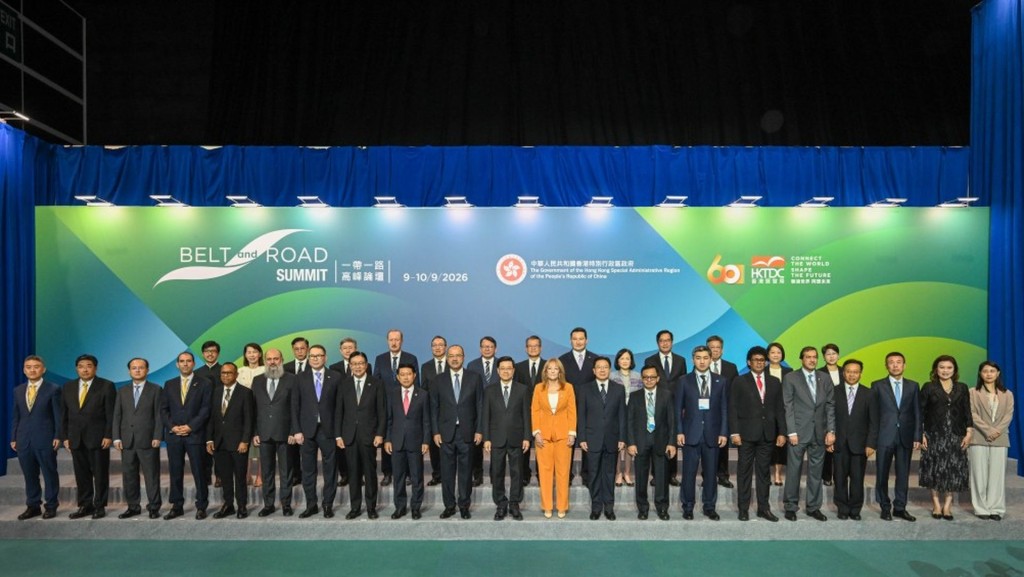
Artificial intelligence has long been a subject of excitement because of the technology and outcomes it can deliver.
This week, I put aside my engineering hat and assess Hong Kong's readiness to implement AI solutions on a massive scale. I want to know the extent to which it is here and where its potential lies for us.
In recent years, a litany of AI-enabled technologies has become common in Hong Kong. This includes data analytics, machine learning and robotics.
They combine in different ways to mimic human abilities and achieve high-value outcomes.
According to "The Smarter Digital City," a research paper by Google and KPMG, Hongkongers are generally optimistic about the potential of AI to help improve their daily lives.
Only about 2 percent perceived AI as a threat, such as through job losses to robots and machine intelligence.
The paper also indicated that the financial market is the area in which AI has had the most penetration.
Martin Lau, the president of Tencent, boldly predicted at Hong Kong FinTech Week 2020 that every financial business will have become a "fintech" company by 2030 because of AI.
Fintech is the term used to describe the practice of leveraging technologies like AI over traditional methods to deliver financial services. But this is just the start of AI in Hong Kong.
We already have more than 150 home-grown AI, robotics and data analytics startups, including some well-known brands like SenseTime, WeLab and Hanson Robotics.
However most of our daily lives remain undisturbed by AI. For example, the fact that the city has a large number of easily accessible outlets has reinforced in-person shopping and traditional payment methods.
Digital payment methods like facial identity recognition, which is powered by AI, is not yet widely adopted - that is, until the pandemic hit.
The Asian Index of Artificial Intelligence: Preparedness and Resilience, compiled by the Asia Business Council in September 2017, measures the penetration of AI in everyday lives.
Hong Kong ranked second to last among eight regions. China topped the list by a big lead, followed by Singapore, India and Japan.
Thus, overall, Hong Kong businesses' progress in applying AI has been slow, especially for the 340,000 micro, small and medium-sized enterprises.
In response to this, the government has tried to be more active in promoting AI. In December it released "Smart City Blueprint for Hong Kong 2.0."
It proposes, among other things, a commitment of HK$900 million to building the infrastructure for AI and other emerging technologies.
In addition, many of the smaller initiatives are AI-specific such as the creation of the iAM Smart platform, which is said to be the future one-stop digital hub of government services.
The government also says it will devote more resources to enhance Hong Kong's R&D and application capabilities in the AI and related fields.
One of the two research clusters to attract the world's top scientific research institutions and technology enterprises to Hong Kong for conducting more midstream and downstream R&D projects will focus on AI and robotics.
Meanwhile, the industry has called for even more support.
The Hong Kong General Chamber of Commerce suggested the SAR should position itself as a "living lab" for showcasing use cases to address urban challenges, thus attracting international investors in the future.
This is heading in the right direction to turn AI from hype into reality.
Dr Jolly Wong is a policy fellow at the Centre for Science and Policy, University of Cambridge